Table of Contents
MidJourney
Intro
The secret of MidJourney's particular aesthetic is training bias and internal prompt interpretation.
MidJourney models are heavily optimized for:
- composition
- lighting
- color harmony
- artistic styles
They intentionally deprioritize literal accuracy. Instead they aim for visual impact.
That’s why images often look:
- cinematic
- atmospheric
- painterly
Even from simple prompts.
MidJourney does not treat prompts like strict instructions, more like creative direction.
Instead of “do this” you are telling the model “paint something inspired by this idea”.
So the prompt language works more like film direction or art briefs.
MidJourney Prompt Structure
Good MidJourney prompts usually follow this pattern:
- subject
- environment
- lighting
- camera
- style
- mood
- parameters
Example:
ancient stone temple in a jungle clearing, fog drifting through ruins,
soft sunrise light, cinematic wide angle shot,
ultra detailed, atmospheric, dramatic lighting''
The model fills in details creatively.
Hint: Add –p at the end of the prompt to use personalization, or activate it in the toolbox.
Parameters
MidJourney uses parameters that dramatically affect results.
Examples:
- Aspect ratio
–ar 16:9 - Stylization strength
–stylize 750 - Chaos (variation)
–chaos 30 - Weirdness
–weird 100 - Version selection
–v 6
These parameters are often more influential than the prompt itself.
🔥 --style raw
- ON → obeys prompt, less creativity, more literal
- OFF → MJ injects taste, composition, style
👉 Best use:
- First grid comparison
- Technical / precise scenes
- Small subject scale control
🎨 --stylize
Controls how much MJ “beautifies” vs obeys.
Range roughly:
- –stylize 0 → strict, almost raw-like
- –stylize 100 → balanced (default-ish)
- –stylize 1000 → very artistic, very MJ-style
👉 Interaction with –style raw:
- raw + low stylize → hyper obedient
- no raw + high stylize → full MJ magic mode
🎲 --chaos
Controls variation in the grid.
- –chaos 0 → very consistent
- –chaos 50 → wild variation
👉 Best use:
First exploration grid when you don’t know what you want yet
🧬 --weird
Underrated and dangerous 😄
- –weird 0 → normal
- –weird 50–200 → surreal / unexpected
👉 Great for:
- arcane
- cosmic
- dark fantasy
🧲 --sref (style reference)
You already touched it:
anchors color + mood + rendering
👉 Extremely strong when:
building a series keeping visual consistency
🧍 --cref / Omni (character reference)
locks character identity / proportions
👉 Crucial for:
- recurring characters
- fixing anatomy drift
⚖️ --cw (character weight)
Controls how strongly –cref is applied.
–cw 100 → very strict –cw 50 → looser
📐 --ar
remember:
- extreme ratios (like 9:20) = composition instability
- raw helps stabilize those
🧠 Hidden Combo (Very Important)
The real power isn’t individual flags, it’s combinations:
🔬 Precision Mode –style raw –stylize 50 🎨 Artistic Mode –stylize 700 🧪 Exploration Mode –chaos 30 –stylize 300
Prompt Tricks
Instead of writing long descriptions, many users stack visual cues.
Example:
brutalist concrete library interior,
massive pillars, shafts of sunlight,
dust particles in air,
cinematic lighting, moody atmosphere,
Kodak Portra 400
Notice the style references.
MidJourney understands:
- film stocks
- photography styles
- art movements
- famous artists
- lens types
These influence the result strongly.
Prompt Weights
MidJourney lets you weight ideas.
Example: forest temple::2 fog::1.5 sunlight::0.5
This tells the model importance levels.
Very useful when balancing elements.
Most amazing MidJourney images come from very short prompts.
Example:
ancient library, candlelight, dust in air
MidJourney already knows how to compose beauty.
Overprompting can actually reduce quality.
Strategy
Use a two-step workflow.
Step 1 Generate the scene concept.
Step 2 Iterate for detail.
Example:
Prompt 1
ancient underground library, candlelight, mysterious atmosphere
Then refine:
ancient underground library, towering bookshelves,
thousands of candles, warm golden light,
cinematic, dramatic shadows --ar 16:9
This mimics how artists refine ideas.
MidJourney has a feature many people overlook.
Style references.
You can upload an image and guide generation with: –sref
This transfers:
- color palette
- lighting style
- visual tone
This is incredibly powerful for consistent aesthetics.
MidJourney workflow notes
Core mindset
- First grids are for discovery
- Variations are for nearby alternatives, not a guaranteed “make it better” button
- The Editor is for surgery
- Subtle Upscale is for final polish
Best working process
- Generate multiple first grids when needed
- test:
- raw ON / OFF
- personalization ON / OFF
- optional:
- chaos for broader exploration
- Pick the strongest base image
- Only use Vary Subtle if I genuinely want nearby siblings or to satisfy curiosity
- If the chosen image is already strong, move to Edit
- In Edit:
- erase only the undesirable zone
- do not touch the prompt unless I need a specific new instruction
- keep personalization ON if it helped the winning image
- generate
- Edit one zone at a time
- choose the best result
- then move to the next zone
- When satisfied, use Subtle Upscale for final resolution and detail
What each tool is really for
- First grid = discovery
- Vary Subtle = nearby siblings
- Remix = inject one precise new instruction
- Editor / Erase / Vary Region = local repair or addition
- Subtle Upscale = preserve image, add detail
- Creative Upscale = alternate reinterpretation, can occasionally fix small issues
Prompt placement rule for Remix
- Start of prompt = subject / composition / camera
- Middle of prompt = scene logic / interactions / action
- End of prompt = mood / rendering / atmosphere / modifiers
When to use what
- If image is 90%+ right:
- do not vary by reflex
- edit local flaws if needed
- subtle upscale at the end
- If image has one bad area:
- use Edit / Erase
- If image is compositionally wrong:
- do not try to repair it with local edits
- go back to a new grid or a structural remix
Editing rules
- One zone at a time
- Keep selection tight but with enough context
- Avoid changing the full prompt unless necessary
- Use edits for:
- hands
- eyes
- fabric
- wings
- local additions / removals
- Do not use edits to reinvent the whole image
Upscaling rule
- Default: edit first, upscale last
- Exception: upscale first only if a tiny flaw needs clearer inspection before editing
Flag logic
- –style raw = more obedient, less invention
- no raw = more MidJourney taste
- –stylize = how much MJ beautifies vs obeys
- –chaos = first-grid diversity, not a refinement tool
- personalization = aesthetic bias layer, not a repair tool
Personal takeaway
- My strength is already selection
- My next improvement is not “iterate more”
- My next improvement is knowing when not to iterate
Subject-First Zoom Expansion Workflow
This workflow starts by locking in a strong subject first, then using successive zoom-outs to generate the surrounding environment around that already successful focal point.
Principle
Instead of trying to get both the subject and the full environment right in the initial grid, first secure a compelling character or focal subject, then progressively expand the frame so MidJourney builds the world outward from that anchor.
Workflow
- Generate an initial grid focused on the subject and select the most compelling result.
- Apply
Upscale Subtleto lock in the chosen subject while preserving the original feel. - Apply
Zoom Out 1.5/2xto expand the composition and let MidJourney generate the first layer of surrounding scenery. - From the zoomed results, select the version with the strongest environment and best overall composition.
- Apply
Zoom Out 1.5/2xto expand the scene further and build a larger context around the subject. Iterate more if interested. - Finish with
Upscale Subtleto preserve detail and finalize the image.
Why It Works
- It prioritizes subject quality before environment complexity.
- It allows the scenery to emerge around an already successful focal point.
- It creates a more organic relationship between character and environment.
- It can produce scenes that feel broader and more immersive without sacrificing the strength of the main subject.
- It is especially useful when the initial image has a strong character but the background is still limited or underdeveloped.
Observed Benefit
This workflow can produce a very strong final image where the subject remains visually interesting and coherent, while the surrounding landscape gains scale, depth, and atmosphere through progressive expansion.
Notes
- Minor defects may remain in the subject. Make all edits after first upscale and before starting zoom outs. If necessary, make edits in between zoom out steps.
- This workflow is particularly valuable for story-driven scenes, where the subject must remain central but the environment also plays a strong narrative role.
- This workflow can be combined with pans to offset the main subject from the center of the image.
- Selection remains critical at each zoom stage: choose the image that best preserves the original subject while introducing the most interesting environmental framing.
Styles
Cinematic Scene
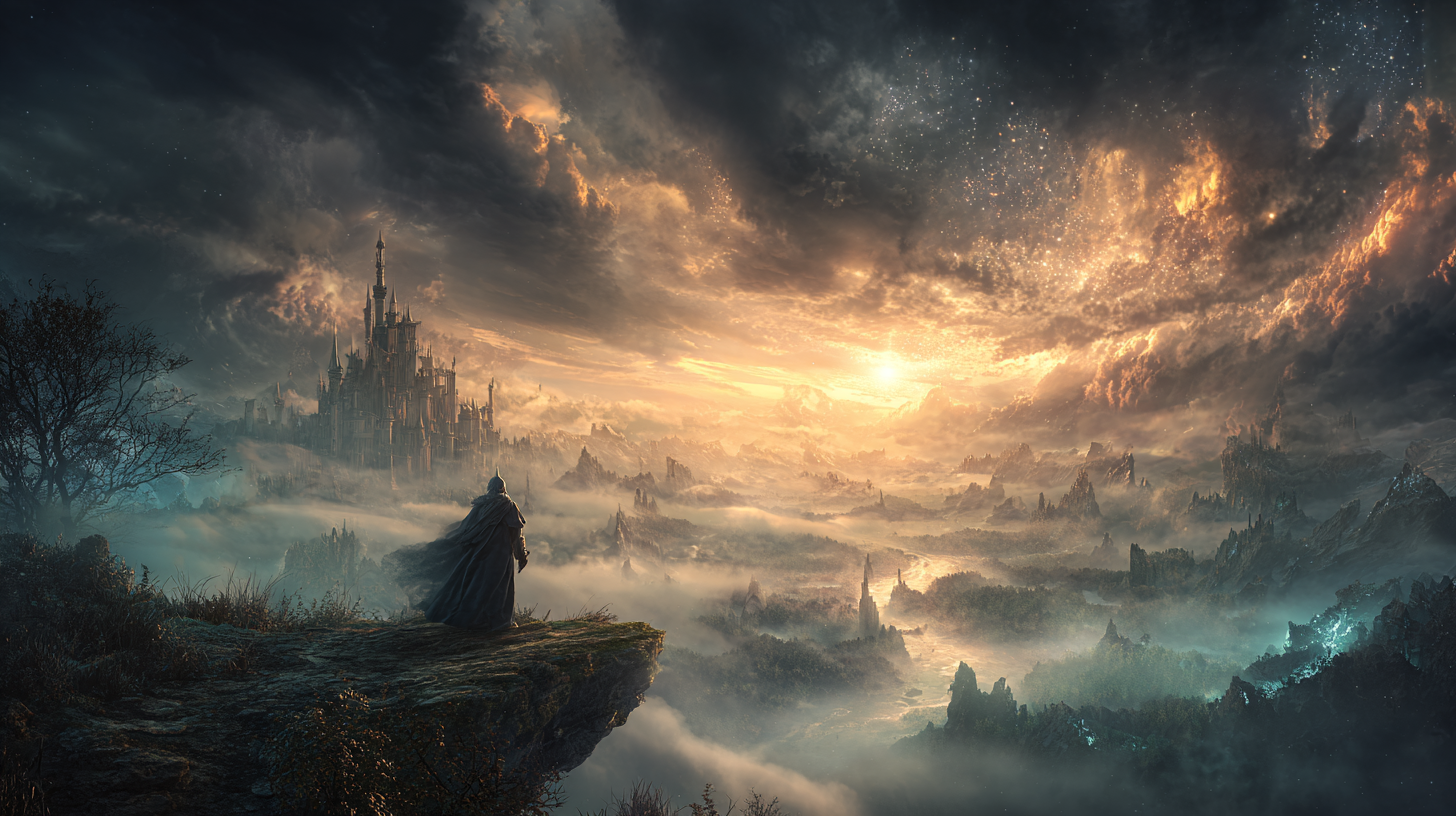
This is the most common MJ structure. It mimics how a film director describes a shot.
Pattern:
subject, environment, lighting, camera, mood, detail
lone mage standing on a cliff overlooking a vast misty kingdom, wisdom,
ancient castles and rivers below,
golden sunrise breaking through clouds,
cinematic wide shot,
epic atmosphere, dramatic lighting, ultra detailed --ar 16:9
- MJ is strongly trained on cinematic imagery
- lighting + camera cues dramatically improve composition
Concept Art
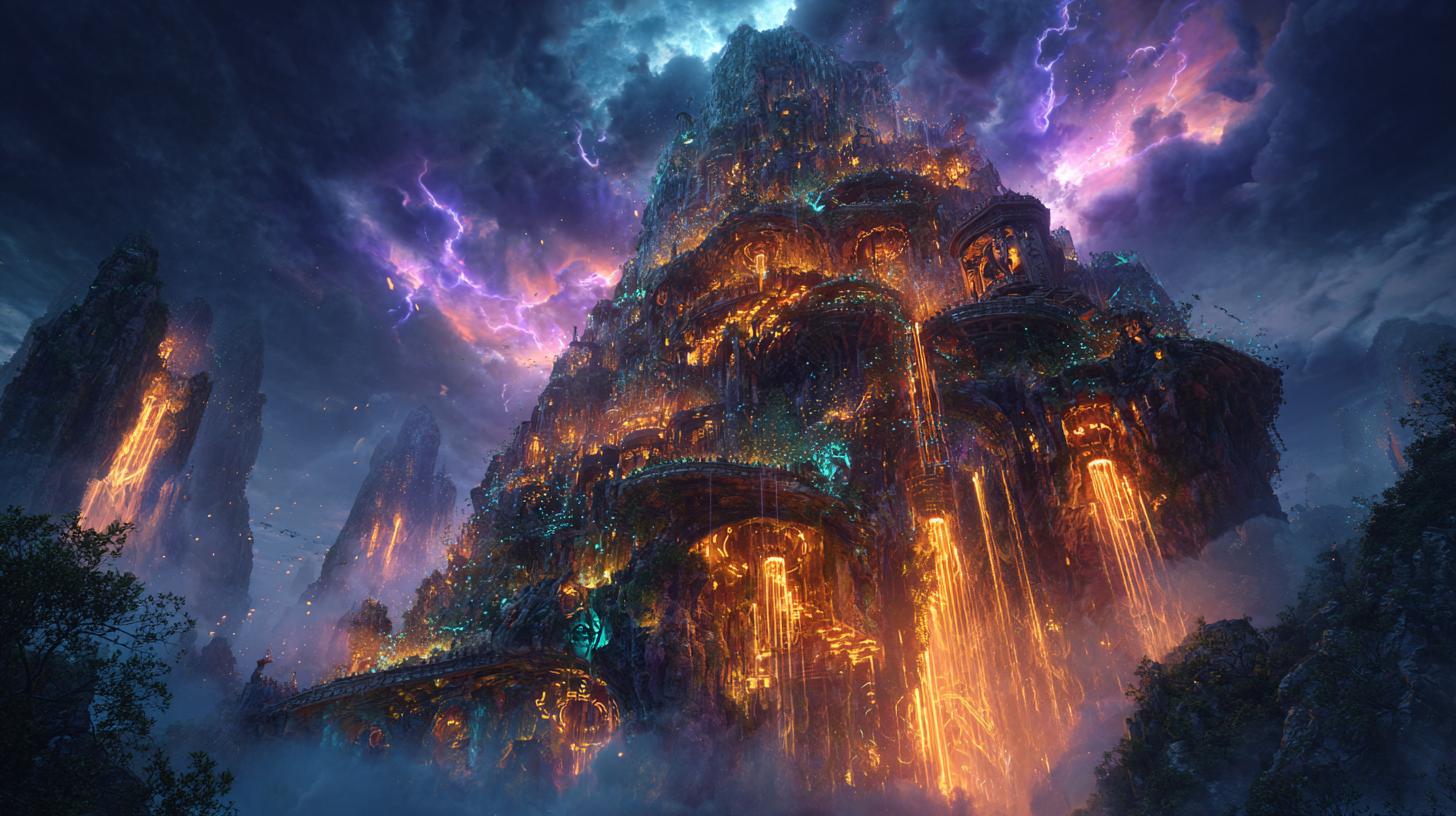
This one is used heavily by game studios and fantasy illustrators.
Pattern:
subject, environment, visual motifs, lighting, concept art descriptors
ancient wizard citadel carved into a mountain,
floating runes and glowing magical waterfalls,
storm clouds swirling above,
epic fantasy concept art,
volumetric lighting, intricate architecture, ultra detailed --ar 16:9
The catch words concept art triggers MJ’s concept-art training data.
This tends to produce:
- huge environments
- fantasy architecture
- dramatic scale
Epic Landscape
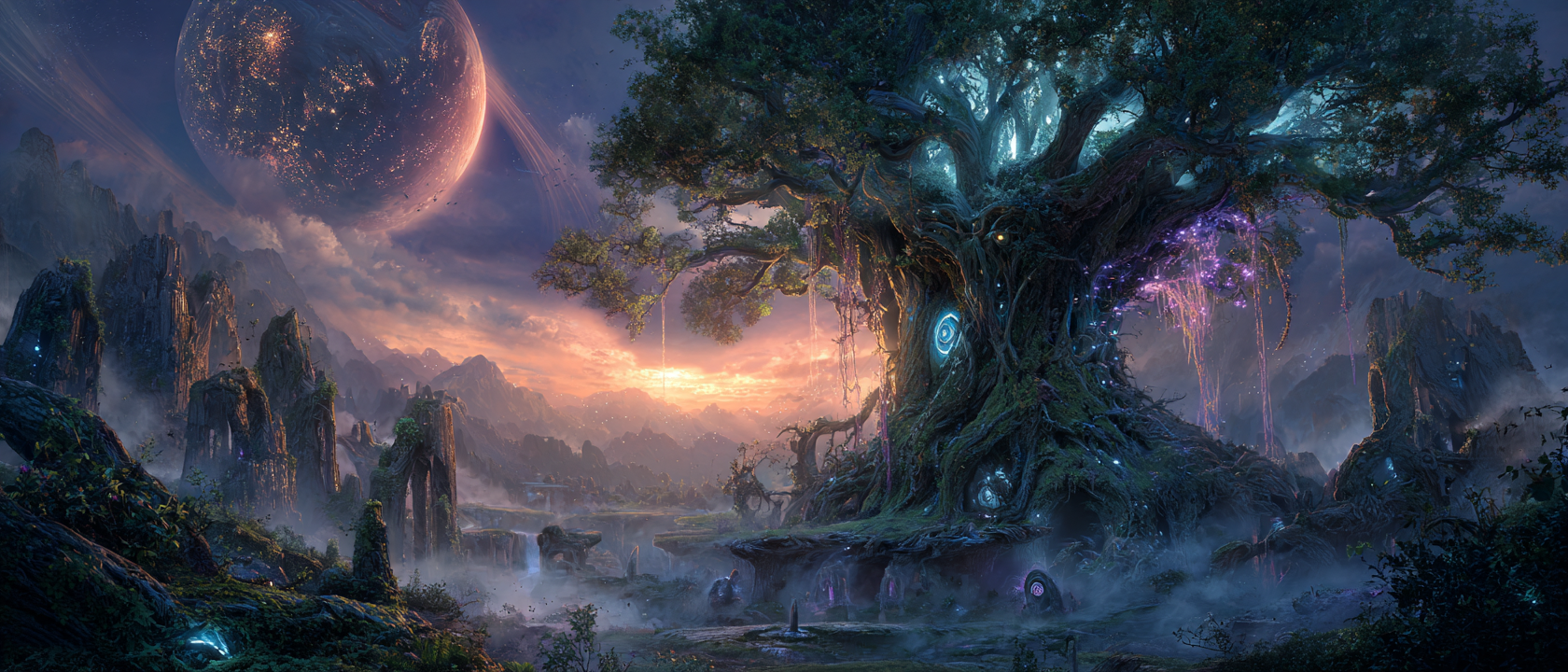
Great for worldbuilding environments.
Pattern:
environment, scale elements, lighting conditions, atmosphere
vast enchanted forest valley,
gigantic ancient trees covered in glowing runes,
huge ring-planets close in sky,
hidden elven ruins beneath the roots,
aerial shot,
soft twilight fog drifting through the valley,
mystical atmosphere, epic fantasy landscape --ar 21:9
MJ excels at landscape depth and atmospheric layering.
Painterly Fantasy
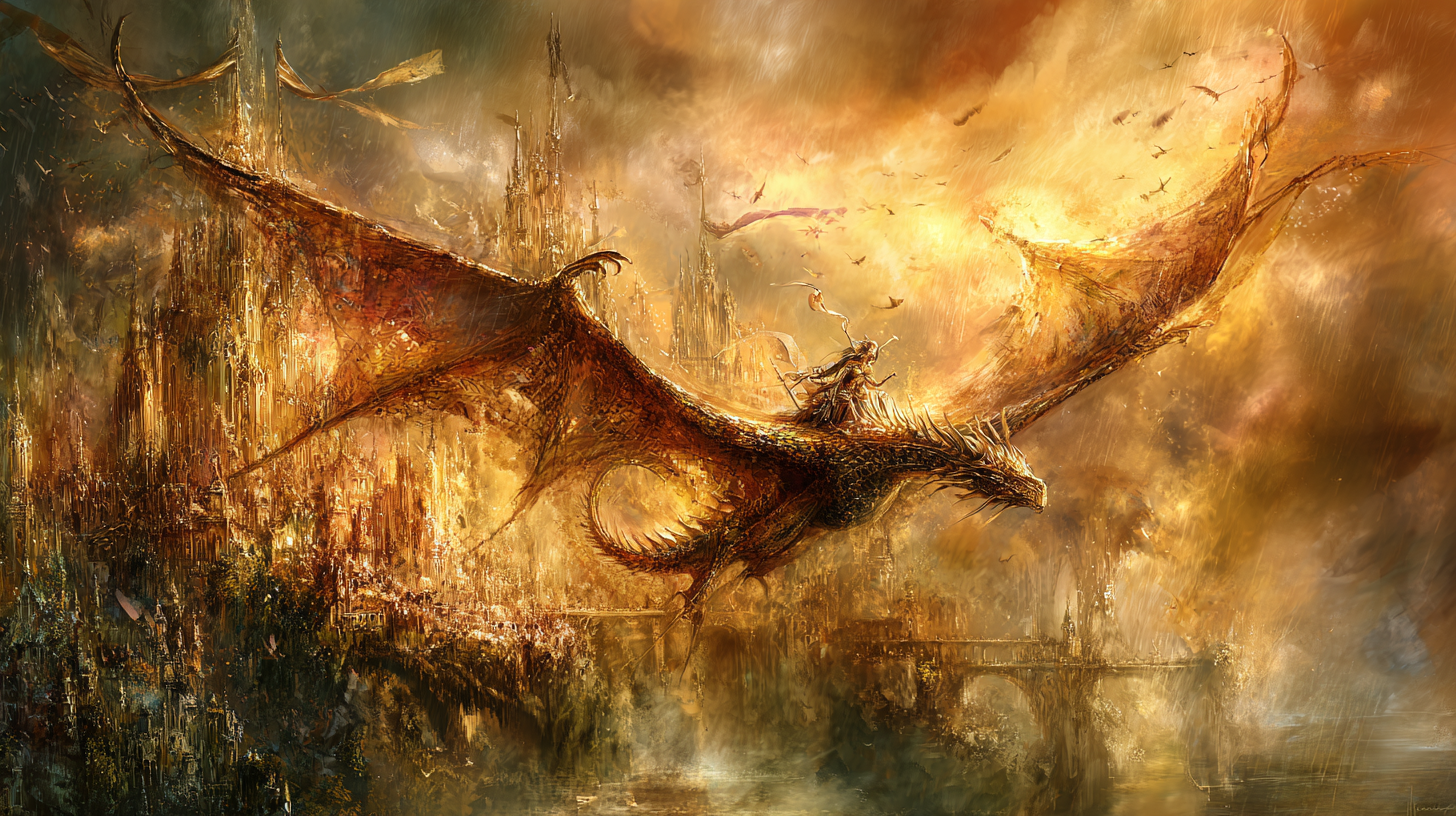
This pushes MJ toward illustration style rather than realism.
Pattern:
subject, environment, artistic style references
dragon rider soaring above a golden medieval city,
banner flags waving from marble towers,
dramatic sunset sky,
epic fantasy painting, oil painting style,
rich colors, masterwork fantasy illustration
Style words like:
- painting
- illustration
- masterpiece
push MJ toward classic fantasy art aesthetics.
Dark Fantasy
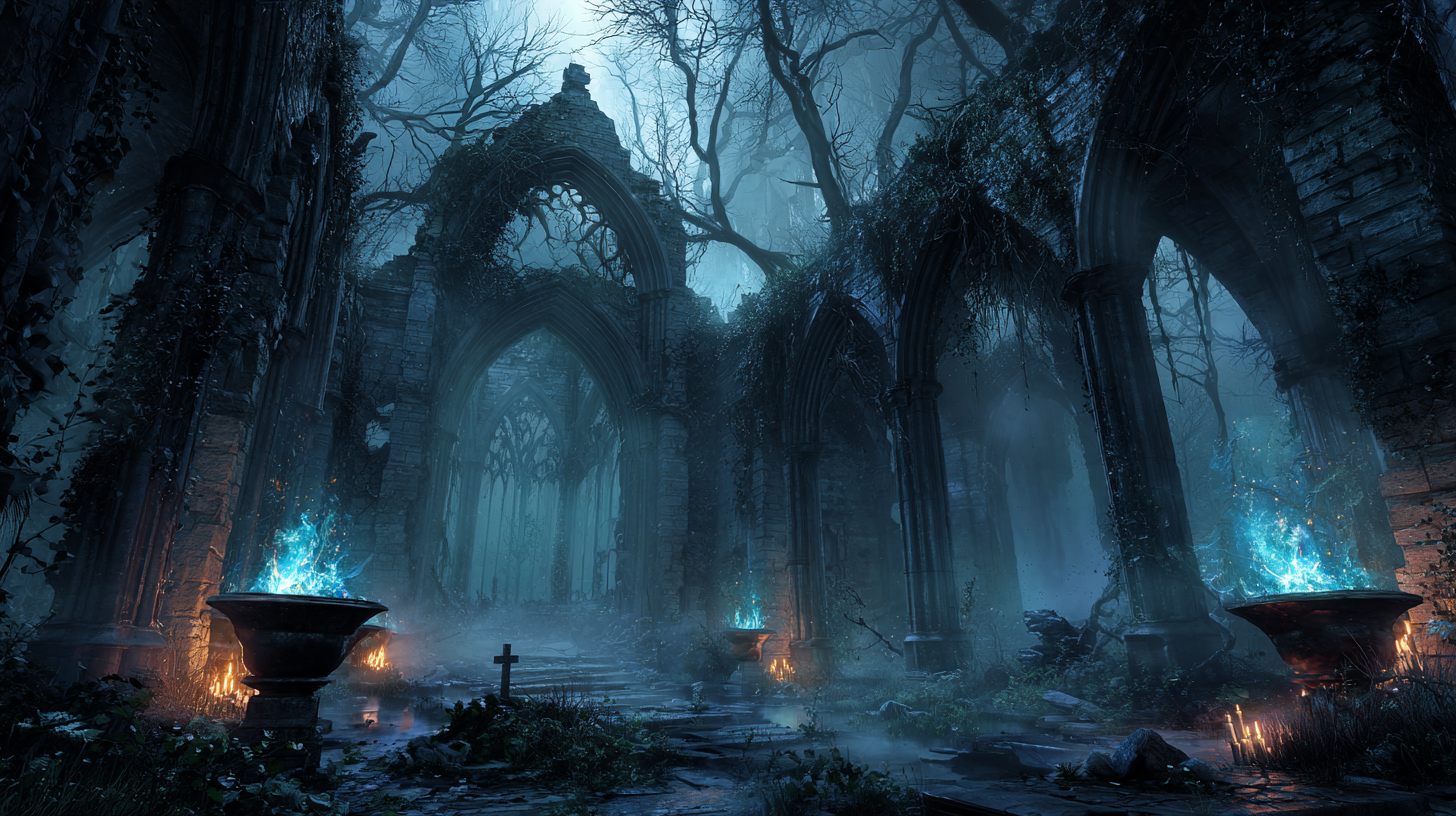
Perfect for mystical, ominous worlds.
Pattern:
subject, gothic elements, lighting, atmosphere
ancient ruined cathedral deep in a haunted forest,
black stone arches covered in vines,
ghostly blue flames burning in iron braziers,
thick fog creeping through the ruins,
dark fantasy, moody cinematic lighting, mysterious atmosphere
MJ is very strong at moody lighting and gothic architecture.
Hero Shot
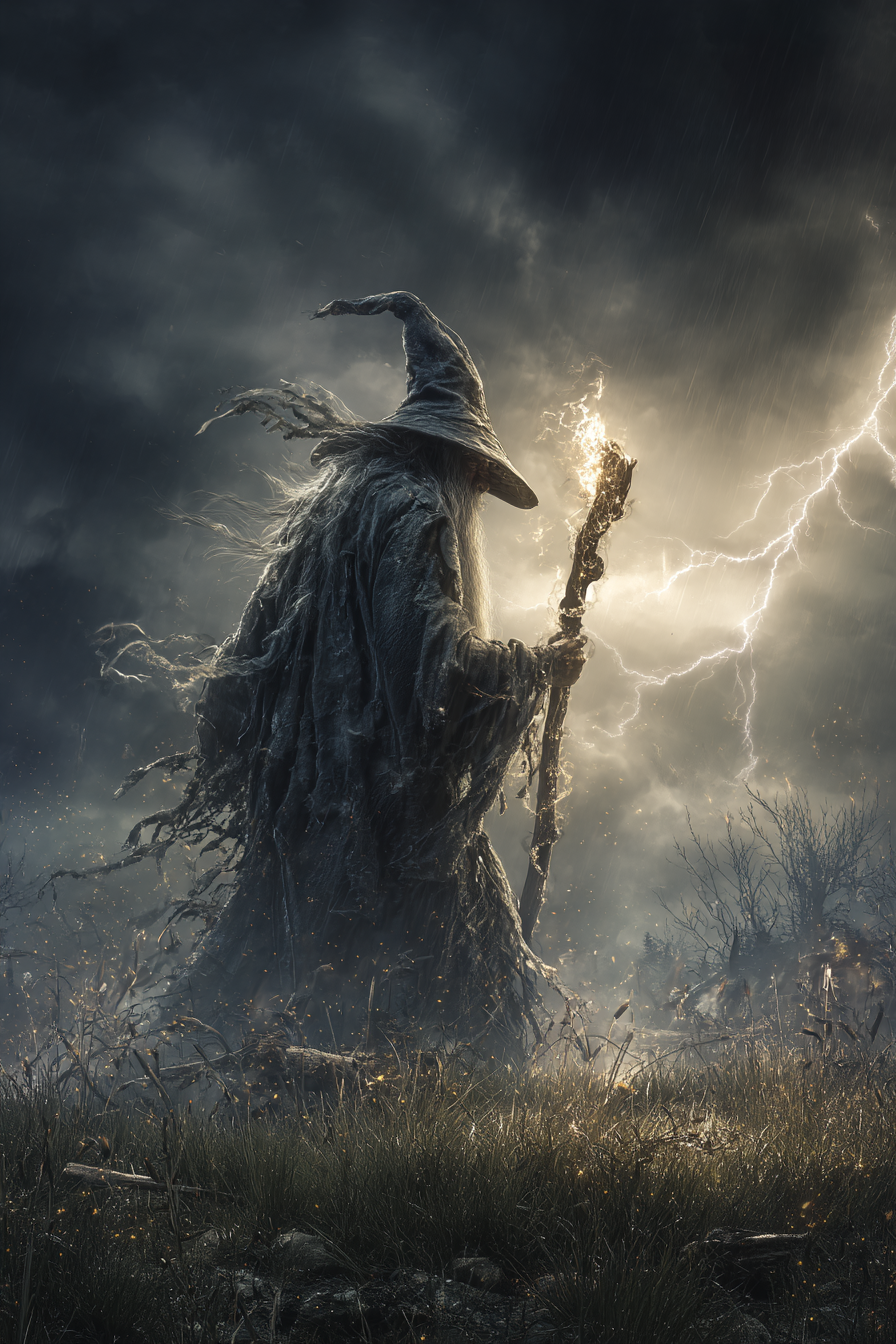
Great for characters in epic poses.
Pattern:
character description, pose/action, environment, lighting
legendary old wizard in long weather-worn robes with pointy hat,
standing atop a battlefield hill holding a glowing staff,
storm clouds behind him,
faint beams of divine particles breaking through the dark sky on the hero,
heroic fantasy, epic cinematic lighting --ar 2:3
MJ loves dramatic silhouettes and heroic framing.
Mythic Creature
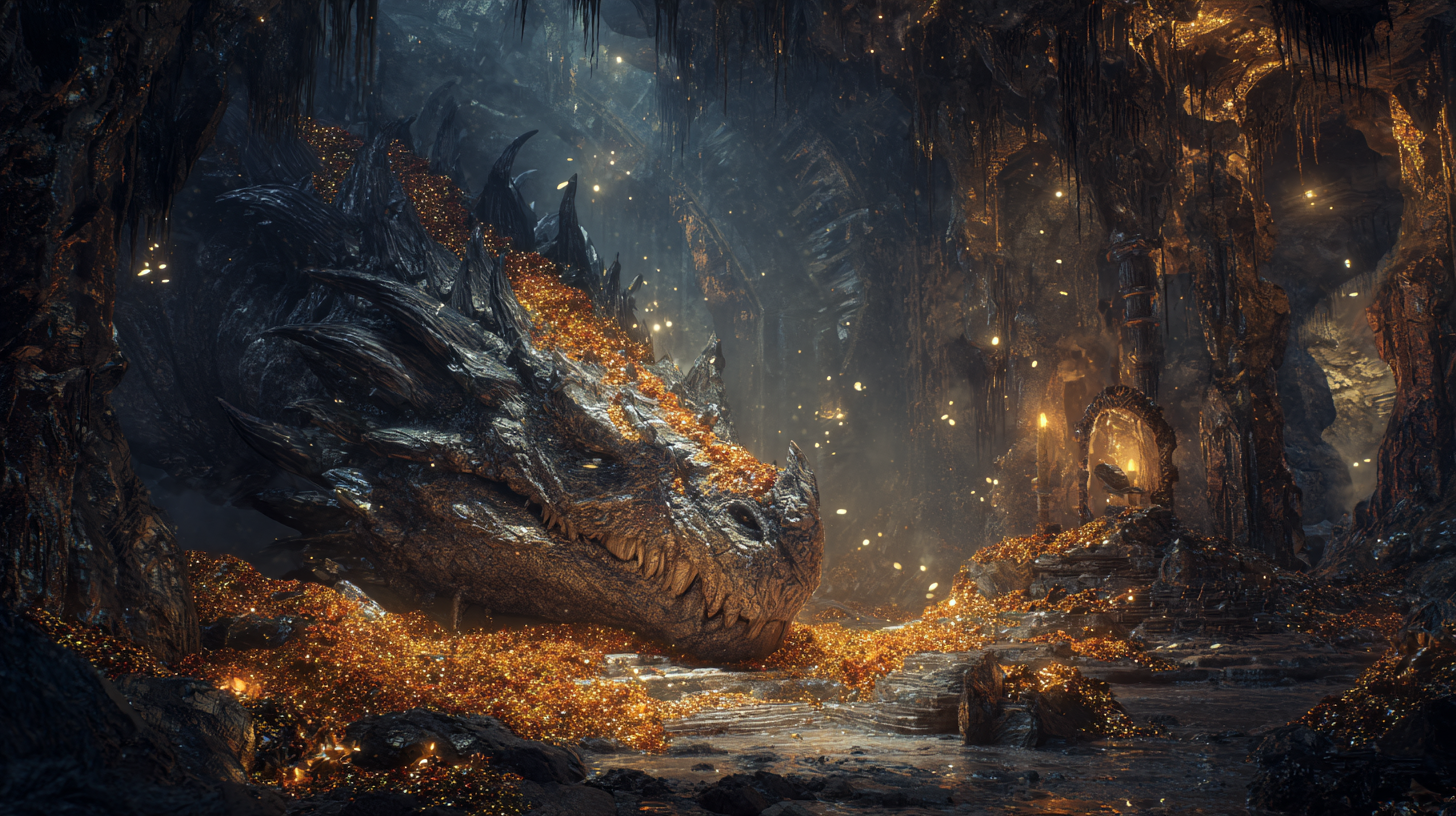
For monsters, dragons, mystical beings.
Pattern:
creature description, environment, lighting, atmosphere
colossal ancient dragon sleeping on a mountain of treasure,
inside a vast underground dwarven hall conquered and abandoned,
river streaks of gold illuminating the cave walls,
embers drifting in the air,
epic fantasy, cinematic lighting, ultra detailed --ar 16:9
Ancient Civilization
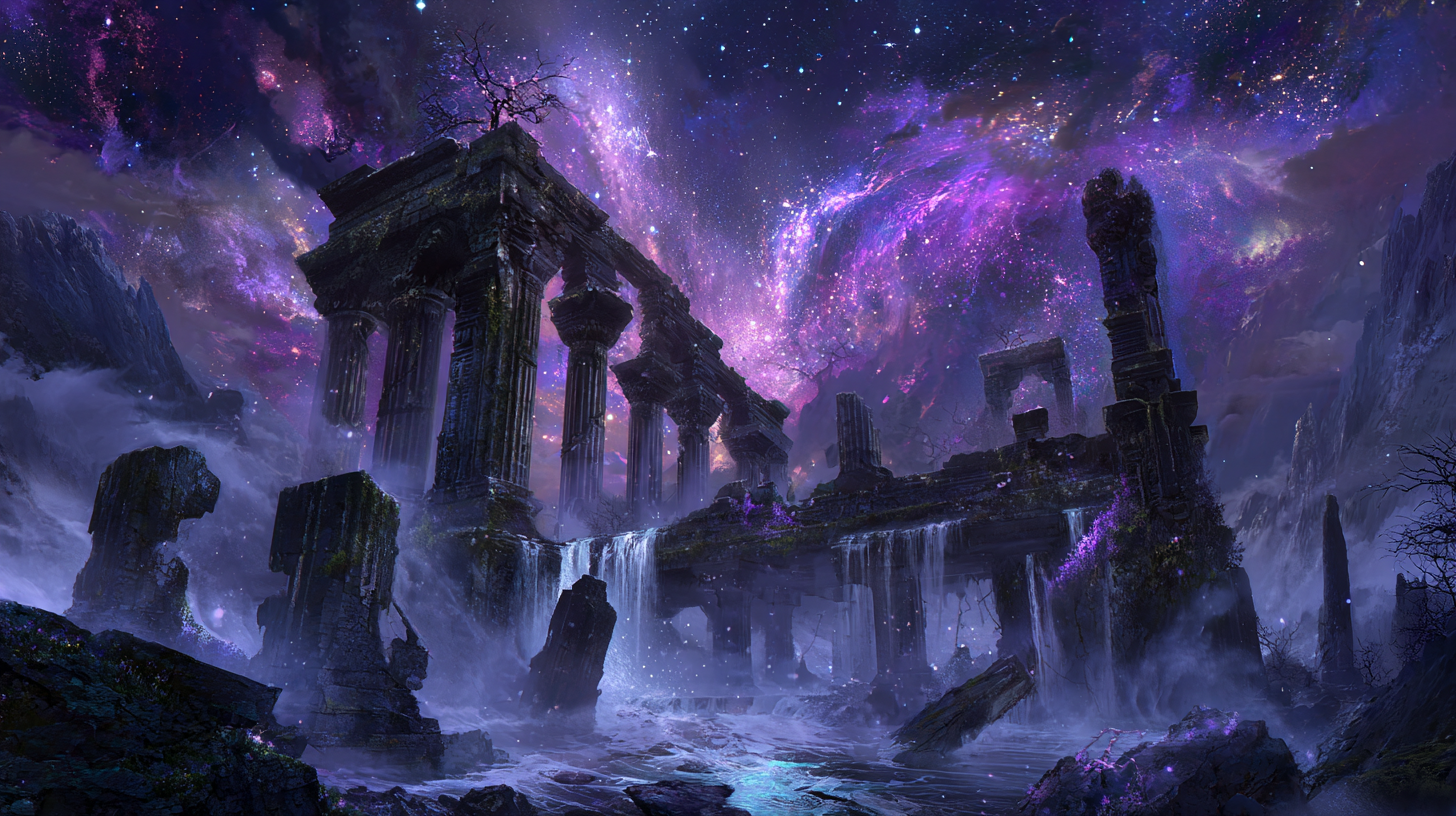
Great for lost worlds and magical ruins.
Pattern:
ancient structure, magical elements, environment, scale
massive forgotten temple of a lost god,
floating in deep space,
stone pillars orbiting the ruins,
ancient runes glowing faintly,
waterfalls pouring from broken towers,
mist rising through the scenery,
mystical stars and galaxy formations in the background,
epic fantasy environment, majestic scale --ar 16:9
Mood-Driven
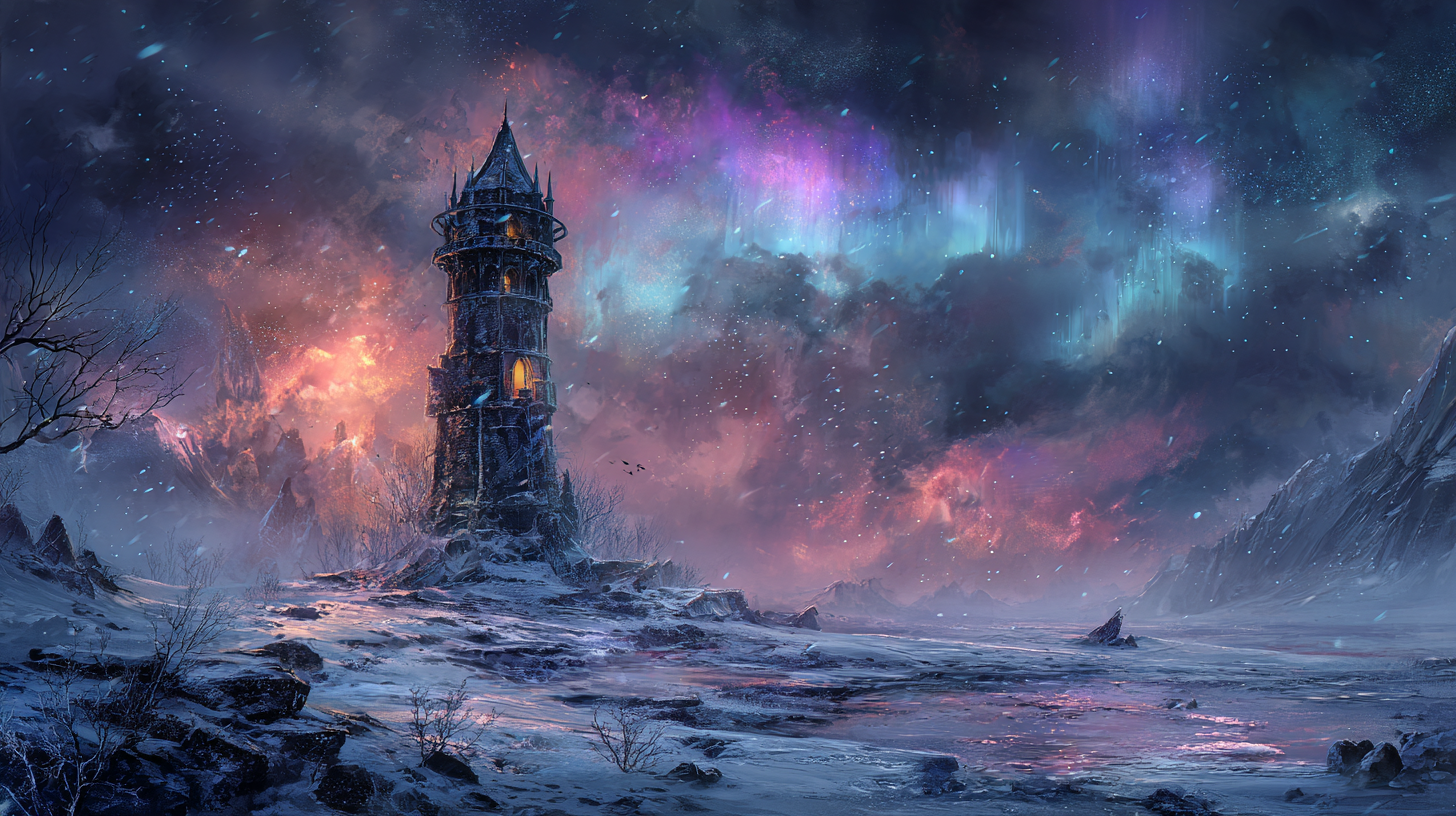
Instead of describing objects, you describe emotion and atmosphere.
Pattern:
place, time of day, atmosphere, visual cues
ancient wizard tower in the middle of a frozen wasteland,
aurora borealis illuminating the night sky,
snow drifting through the air,
lonely magical atmosphere,
mysterious epic fantasy mood --ar 16:9
This produces very atmospheric images.
Minimal Prompt Pattern
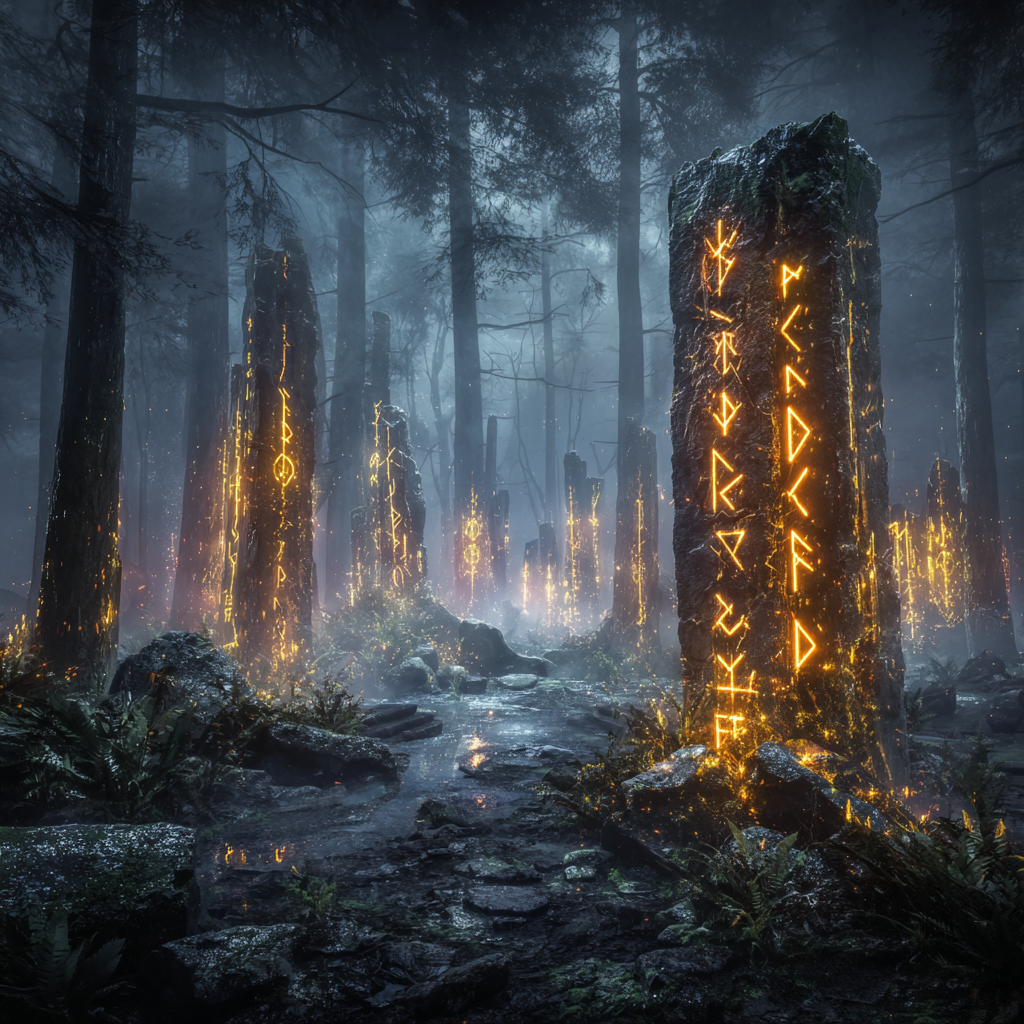
MJ often works best with surprisingly simple prompts.
Example:
ancient enchanted forest temple, glowing runes, mist, epic fantasy
Because the model already knows how fantasy imagery usually looks, it fills in details beautifully.
Many expert users start with very small prompts and iterate.
Power Words in Fantasy Prompts
Certain words trigger stronger MJ outputs.
| Environment | Atmosphere | Lighting | camera |
|---|---|---|---|
| ancient | mystical | golden sunrise | wide angle shot |
| forgotten | ethereal | stormlight | aerial view |
| sacred | epic | glowing runes | low angle |
| enchanted | legendary | torchlight | cinematic shot |
| ruined | ominous | volumetric light | macro shot |
| colossal | divine | - | - |
| towering | - | - | - |
Search word suggestions
- Fairies
- Tomes / Grimoires